
The Masterpieces
1. Franz Schubert’s ERLKÖNIG (1815)
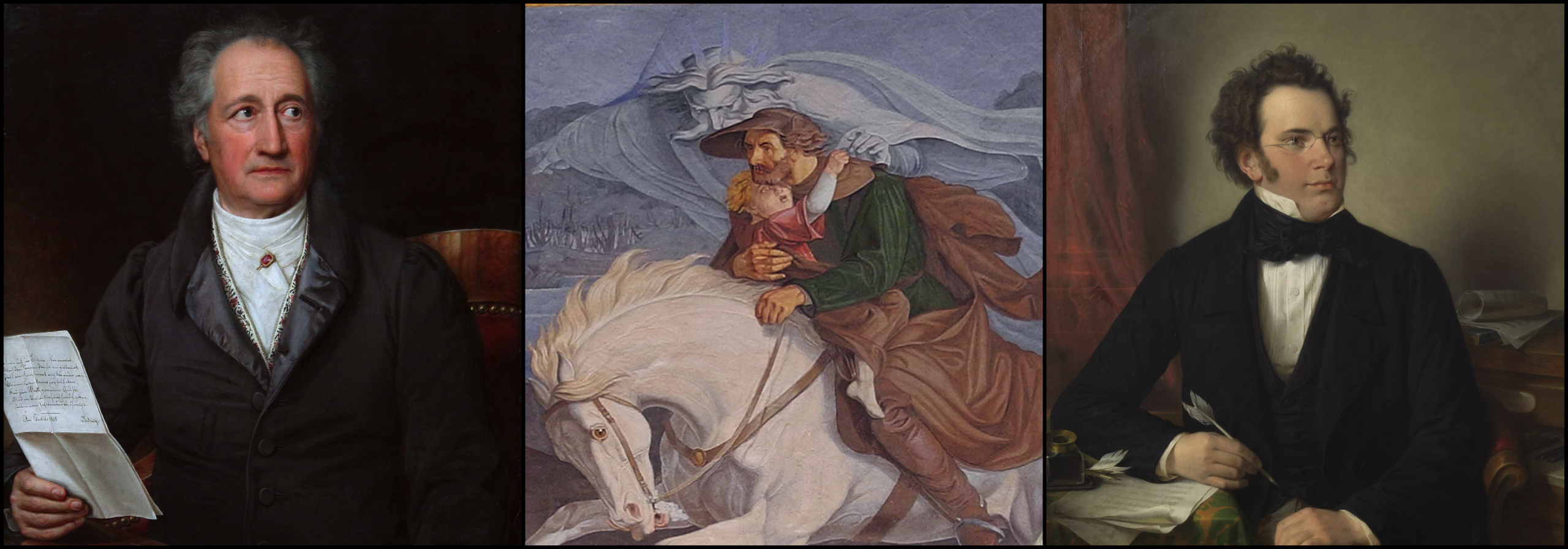
We begin with a song, but one that is over 200 years old and in German. Franz Schubert (1787-1828, above right, painted by Wilhelm August Rieder in 1875) blazed bright but far too briefly. He died at only 31 and yet left an extraordinary body of work.
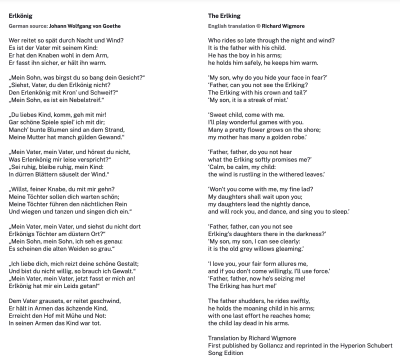
This song, Erlkönig, was a setting of a poem by Goethe (1749-1832, painted by Joseph Karl Stieler in 1828, above left) which Schubert composed at only 18. (That really is not fair, is it?) The poem reflects the great obsessions of the burgeoning movements of Romanticism, with its resistance to reductionistic materialism, a love for the sublime and the grandeur of the natural world, fascination with human passions, as well as the threshold with the metaphysical. This is all captured in this short poem, with the drama’s different characters reflecting different perspectives.
That is the key to Schubert’s setting. The song is propelled by its constant rhythmic foundation on the piano, and the beautiful melody weaves its way through the poem’s eight verses. But the huge challenge for both pianist and singer (in under 3-4 minutes) is to differentiate between the Father, the boy, the wraithlike, demonic Erl-king, and narrator (a scene painted by many artists including this detail above of a mural by Peschel in Dresden). Not only that, but the tensions are ratcheted up by Schubert’s device of going up a semitone in each new verse.
This brilliant musical miniature is a remarkable achievement: dramatic, chilling, shocking. It perfectly illustrates how something created on the smallest scale can transport one into vast emotional landscapes.
2. Kei Miller’s AUGUSTOWN (2016)

To Joel’s home country of Jamaica now, and a prize-winning novel by Kei Miller, an old friend of his (as it happens). Augustown is a district of the capital, Kingston, and in Miller’s deft handling, it becomes a microcosm of both Jamaica’s life and complex history.
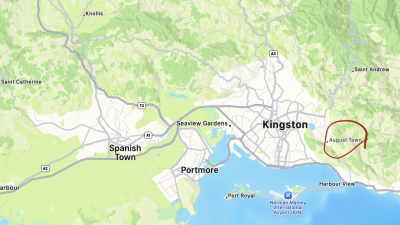
The story traces the devastating but unintended consequences of authoritarian action:
-
firstly with the real-life treatment in the 1920s of the revivalist preacher Alexander Bedward by the colonial government after he claimed to his many followers that he could fly.
-
then in the 1980s, the cruel, unsanctioned haircut of a Rastafarian boy by his officious school-teacher.
Never didactic or simplistic, Miller is always sensitive to the complexities of the situation and the tragedies that follow. He gives one such a sense of place, so that even if one has never visited this district, let alone the Caribbean, the book feels totally alive, with scores of compelling characters that seem to have both agency and inevitability.
The book is truly a fine achievement and deserves wide readership.
Oh a yes, Rastamouse was a thing (thanks Sophie). British cartoon with (believe it or not) 104 episodes!! They even did a set at Glastonbury in 2011.

3. Egon Schiele’s FOUR TREES (1917)
Back to Vienna again, but a century later. In fact, we only just noticed after completing the recording the lovely symmetry of masterpiece dates: 1815, 2016, 1917!! It really is by chance. If ever we needed to illustrate the fact that extraordinary things can be made by difficult, even despicable, people, then this is it.
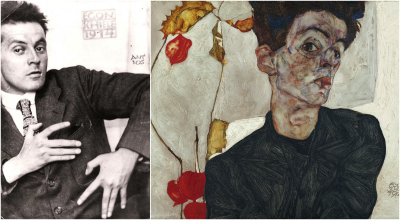
Egon Schiele (1890-1918, photo taken in 1914 and self-portrait painted 1912) was a profoundly disturbed artist who was contemporary with Gustav Klimt and strongly influenced by him (among others). But the dysfunctions of his upbringing, plus the darkness (and at times illegalities) of his proclivities, make him a very difficult subject. But there’s no doubting his artistic genius. As Sophie pointed out, for those who only know his visceral and shocking portraits, this landscape comes as a welcome surprise and relief.
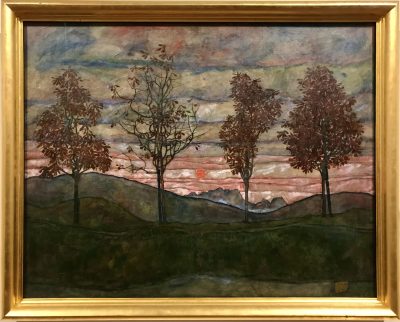
His FOUR TREES has an autumnal melancholy to it (it was painted only a year before he and his wife would die three days apart of the Spanish Flu) contains multitudes, as is so often the case in artistic evocations of the four seasons.
It’s not straightforwardly figurative but conveys some unease. Why are they such different shapes, and isolated all in a row, and why has the second already lost most of its leaves?
And yet, for all its weirdness, it is utterly compelling. It’s hard to tear one’s eyes away once you start looking closely.
Other Mentions
Triptych highlights after two series:
-
Sophie: Joel likening Nick Cave’s Ghosteen to William Shatner’s ‘singing’ on his Christmas album… (1:5).
-
Joel: Sophie describing her childhood being reared by R S Thomas and Lionel Ritchie in the Welsh valleys (1:1).
-
Mark: Sophie’s subsequent childhood memory of avoiding the juvenile games of fellow school kids through her immersion in the work of Lord Byron.