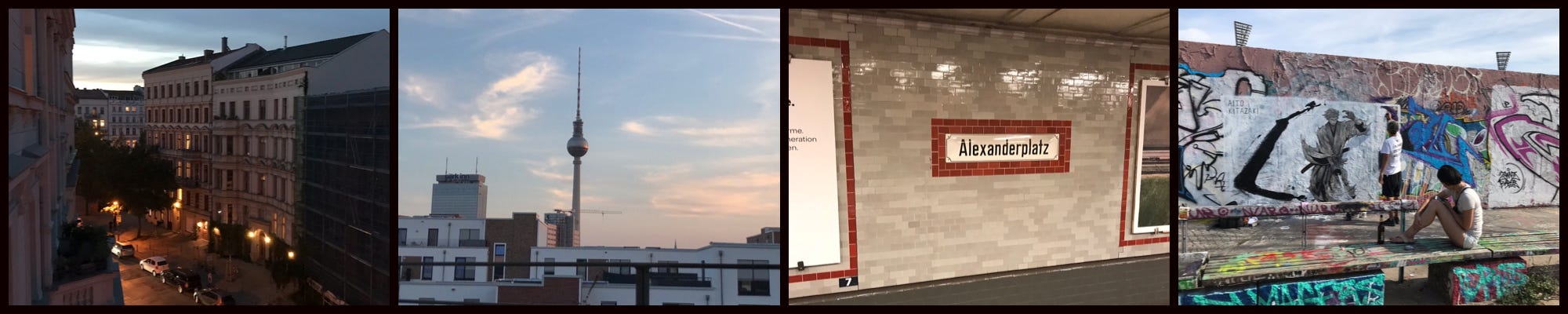
Something a bit exciting has happened in my mini-neck of the woods. Finally, on Sunday evening, I completed the first draft of a novel that I’ve been working on for… well… nigh on 8 years.
I don’t quite know what to do with myself now. Of course, I have no illusions about its future, recognising how few novels actually come within spitting distance of a publisher let alone a bookshop, so we’ll see. If I put anything else about it here, it’ll be about lessons from the process more than anything else.
So I thought I’d just mention here how it all began. After all, writing a novel set within a very specific timeframe during the Cold War — we’re in East Berlin between February 1968 and some time in the middle of 1969 — is hardly my natural habitat. I don’t speak German, have only visited the country a handful of times, and have never lived in a communist society. But such impediments never stopped the likes of Mary Renault from inhabiting in Ancient Greece, Iain Pears in Restoration Oxford, or in colonial New York (or any others I’ve mentioned).
It all began with of a bit of graffiti.
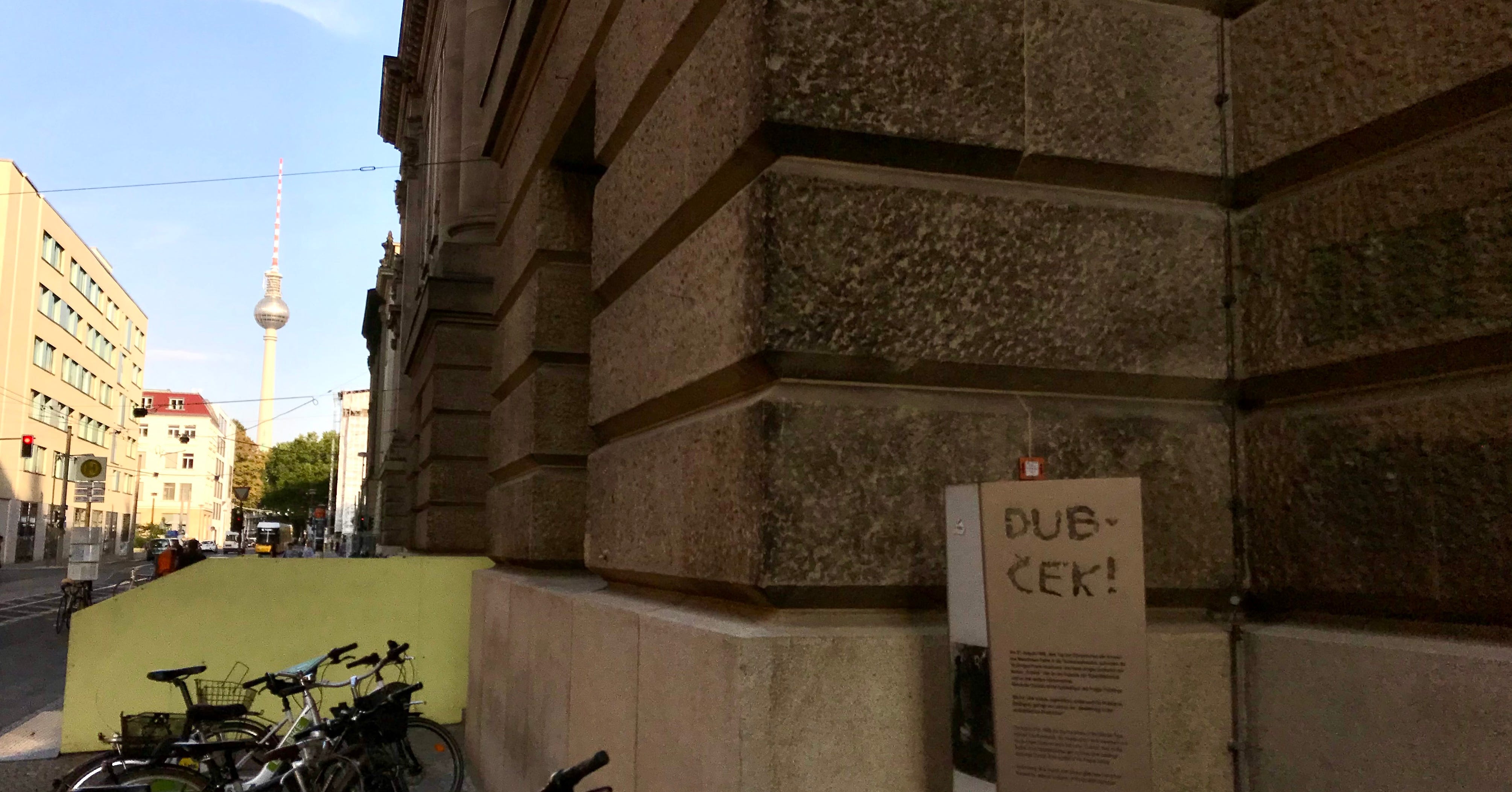
The walls belong to the State library, and stands just a block or two away from Friedrichstrasse Station and its infamous Palace of Tears. In August 1968, 2 students had scrawled the name of the new Czechoslovak leader, Alexander Dubček. For this they were imprisoned and thereafter struggled with state-backed harassment right until the fall of the Berlin Wall in 1989.
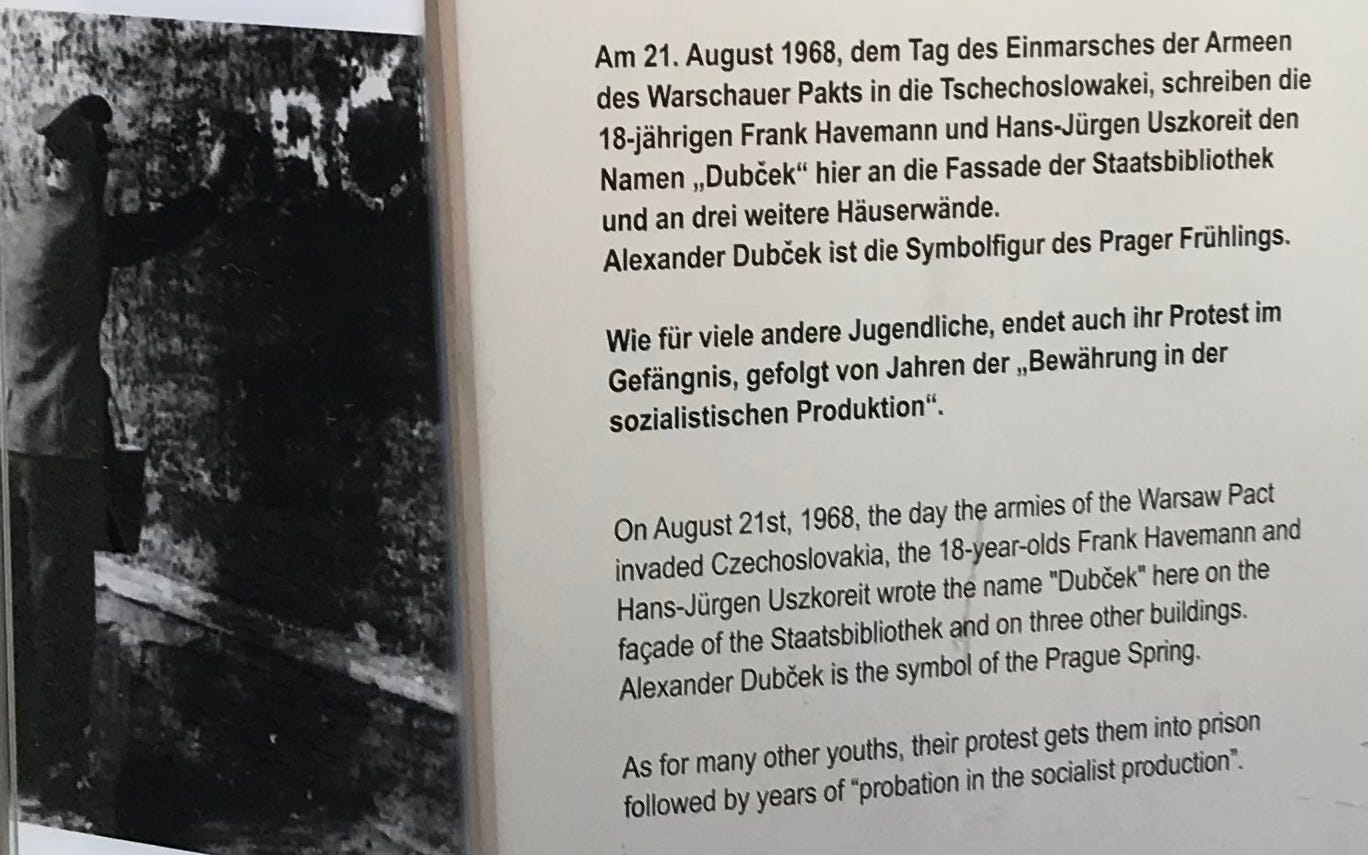
This triggered a whole bunch of random thoughts. In particular, I was very struck by the thought that people throughout the Warsaw pact countries had been watching Czech events with bated breath since Dubček kicked off the Prague Spring. What was Moscow going to do? When the tanks finally went in, the world looked on in horror… including the citizens of East Germany.
That got me pondering about ordinary lives and how on earth one might need to navigate the horrors of totalitarianism.