

Following the review of Roman Soloviy’s collection of wartime accounts from Ukraine (see previous post), here are a number of excellent books to help get minds around this horror. Not an exhaustive list was may imagine, nor an authoritative one as I’m no expect by any means. But these are the ones I’ve found most helpful, gripping, chilling, informative, stretching, funny, poignant, etc etc.
On Recent Events
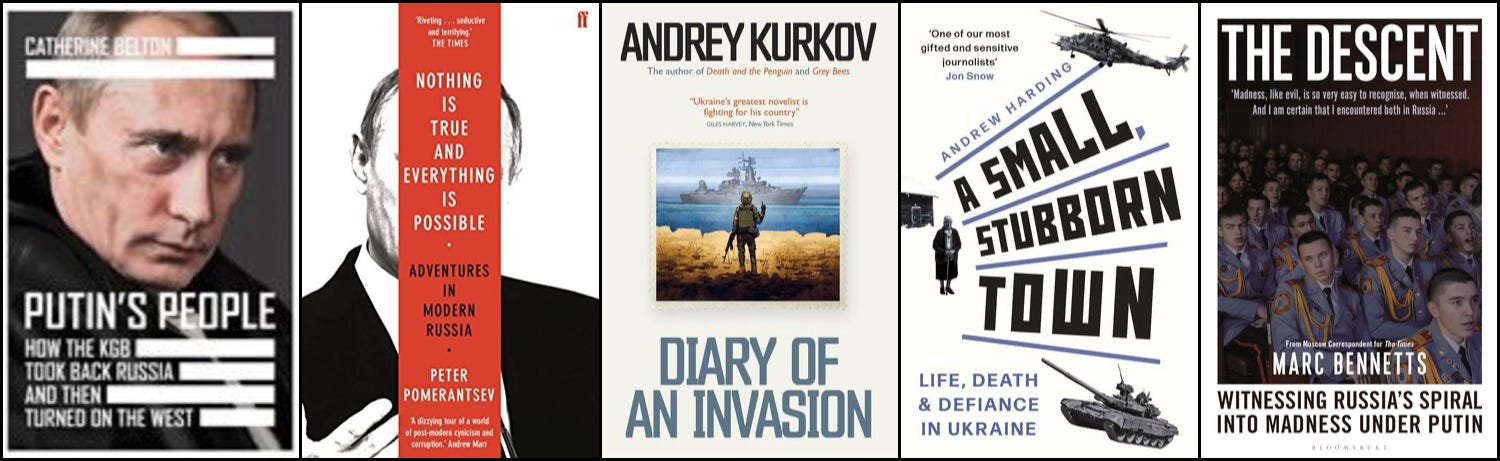
-
Putin’s People by Catherine Belton (ex FT correspondent to Moscow): the result of 10 years of extensive and courageous research. If even HALF of this is true it is utterly damning. How post-Soviet Russia has become the ultimate gangster-espiocracy from its origins in mafia-KGB collaboration in Leningrad/St Petersburg.
-
Nothing is True & Everything is Possible by Peter Pomerantsev: how do you control a nation of 11 time zones? Television. Pomerantsev is the British son of Russian emigres in the 1970s. He returned to the motherland in the late 90s to give something back working in TV. Shocking but utterly compelling.
-
Diary of An Invasion by Andrey Kurkov: Kurkov is one of my favourite novelists (see below) and a great ambassador for Ukraine. This is an important account of the first weeks of the Feb 2022 invasion. How different this country really is from all the Kremlin’s propaganda.
-
A Small Stubborn Town by Andrew Harding: Russia expected Ukraine to be a walkover, famously packing dress uniforms for the victory banquets in Kyiv. However, the resistance was fierce and remarkable. Andrew Harding is a British journalist who was in the country soon after the invasion and grippingly reports from Voznesensk and the area around it.
-
The Descent by Marc Bennetts: I’ve only just started this. But in away it takes the Belton and Pomerantsev’s story forward, by the Times correspondent. It is terrifying how much Putin has been able to do in this vast and complex country. With devastating consequences for the world.
Ukrainian Creative Writing
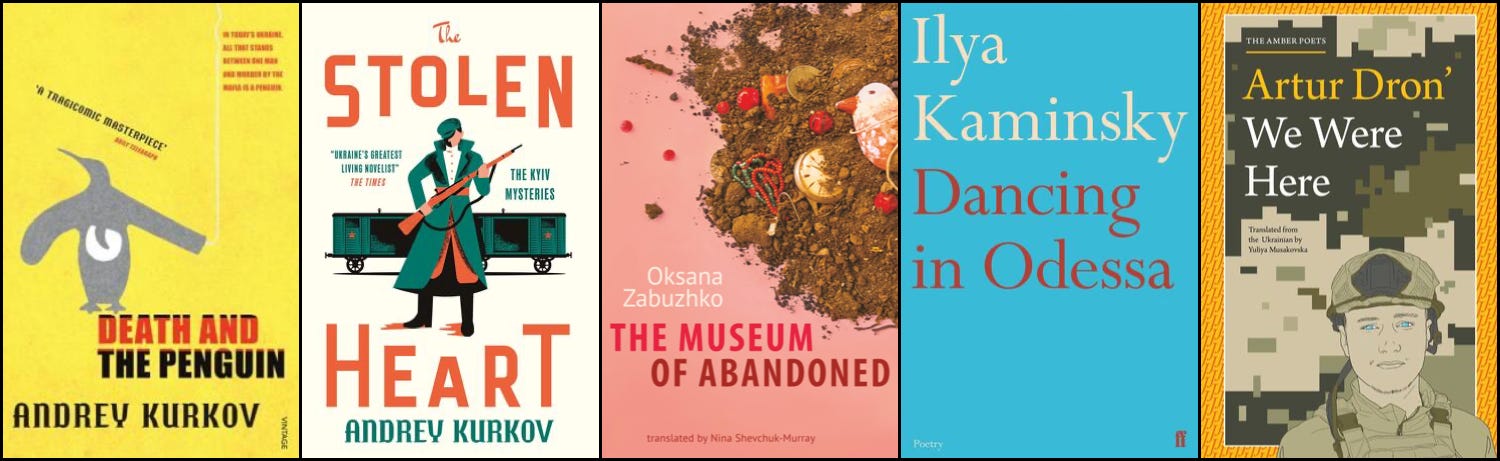
-
Death and the Penguin by Andrey Kurkov: This was my gateway drug into Kurkov’s writing. It is laugh-out-loud funny satire, set in the chaos around the collapse of the USSR in 1991. Someone needs to look after a penguin from the Kyiv zoo, and it falls to Victor, hapless obituaries writer…
-
The Stolen Heart by Andrey Kurkov: The 2nd of 3 (so far) in Kurkov’s Kyiv Mysteries, set in another moment of Ukrainian chaos after the 1st World War, when the Soviet Union was being forged and the country had initially sought an path independent of Russia. Samson Kolechko is the detective who has to find some justice in an anarchic time.
-
The Museum of Abandoned Secrets by Oksana Zabuzhko: I’ve bought this for the journey to Kyiv this coming weekend (15 hours in a train should be sufficient!) on recommendation. I’m obsessed with the question of how a place preserves the memory of its fallen and suffering, especially in the face of totalitarianism and tyranny.
-
Dancing in Odessa by Ilya Kaminsky: This poetry anthology has been out for 22 years now, by a Ukrainian now living in the USA. Some of these poems are profound and poignant. And I was drawn inexorably to it because we have good friends who worked in the Odessa Opera House ballet corps (but are now in exile in England).
-
We Were Here by Artur Dron: A more recent anthology this time, written by a young solider invalided out of the Ukrainian forces repelling Russian attacks. These are remarkable poems, poignant and spiritually weighty; it was from these that I read on the 4th year of the full-scale war.
On Ukrainian History in the 20th Century
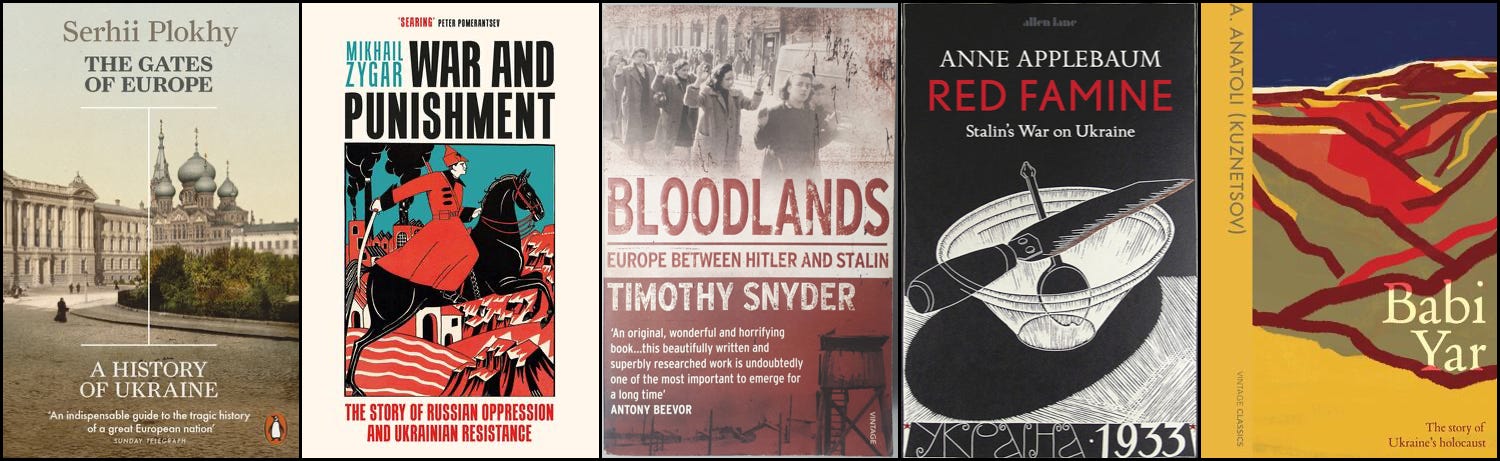
-
The Gates of Europe by Serhii Plokhy: Plokhy is a Harvard Professor and veteran historian of Ukraine and the whole region. This is a vital book for placing the current horrors into context, not least because he dismantles some of Moscow’s absurd claims about Ukraine’s deeper history as part of the so-called Russkiy Mir (Russian world).
-
War and Punishment by Mikhail Zygar: This is one of the few books on this list written by a Russian. But Zygar was an outspoken and courageous journalist who risked Putin’s wrath and is now in exile. He has written this because Ukrainian friends have found it difficult to talk with someone who might have swallowed Russia’s line whole. So he set out to dismantle the propaganda. Looking at Ukraine’s history over the centuries, he shows how each claim is far from the truth. It is an agonising story.
-
Bloodlines by Timothy Snyder: I read this a while back out of a desire to understand the experience of Central Europe better, so it was a few years before my first visit to Ukraine (in 2016). The corridor between the Baltic and the Black Seas (ie Poland, Belarus, Ukraine, plus the Baltic states) witnessed the most appalling bloodshed and horror in the last century as Hitler and Stalin vied for dominance. Arguably the region to have suffered more gruesomely and relentlessly than any other in the world. The next two books drill down into events caused by each dictator in turn…
-
Red Famine by Anne Applebaum: Was Stalin or was Stalin not responsible for the Holodomor (lit. extermination by hunger) that wiped out millions of Ukrainians in the 1930s (proportionally far larger than the deaths in the other Soviets)? Applebaum’s case is compelling and horrific. If you’ve seen the powerful James Norton film Mr Jones, then this provides the corroboration.
-
Babi Yar by Anatolii (Kuznetsov): After Stalin, then Hitler, after the Nazis conquered Ukraine and held it for a couple of years. Babi Yar (or in Ukrainian Babyn Yar) is a smallish ravine now in the city bounds of Kyiv – and literally 1000s of Jews were gunned down within it. The first large-scale atrocity of the Holocaust and the sign of what was to come. This was based on journals and eye-witness testimony.
More Ukrainian History in the 20th Century
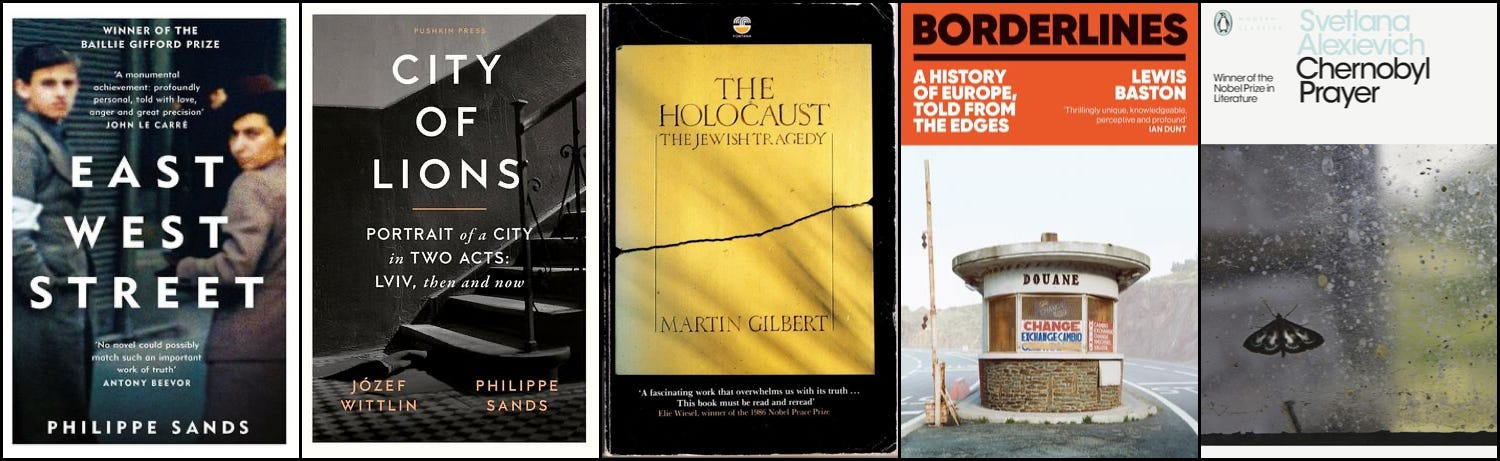
-
East West Street by Philippe Sands: the international rights lawyer investigates family roots and they take him to the Jewish intelligentsia of Lviv, Ukraine – and ultimately to the Nuremberg trials after the end of the Second World War. This is a book that results in some sense of resolution, unlike so many about the era; and the fact that so many family threads meet in it is gripping.
-
City of Lions by Wittlin & Sands: Lviv (aka Lwów, Lemberg, Lvov) is a city I have come to love. It’s beautiful, historic, impressive and fascinating. Sands adds his own reflections about it to a classic: Józef Wittlin’s sensual and lyrical paean to his Lwów, written in exile. Very affecting and beautiful.
-
The Holocaust: the Jewish Tragedy by Martin Gilbert: A monumental work (nearly 40 years old), this is not for the faint-hearted, of course. But it is a masterpiece and necessary book. The evidence accumulates and demands attention, resolutely standing up to the cruelty of the deniers.
-
Borderlines: A History of Europe in 29 Borders by Lewis Baston: This is a much less demanding book, even quite funny on occasion, especially when discussing some of the oddest borders in Europe (and there are lots). It’s not exclusively about Ukraine – but it sure does feature.
-
Chernobyl Prayer by Svetlana Alexievich: apparently this book by the Nobel Prize winner is getting a fresh translation. But it is fascinating and heart-rending, full of testimony and genuine experiences of the tragedy that occurred 40 years ago this year. I don’t think I’ll forget visiting the Chornobyl museum in Kyiv as long as I live (after all, the reactor is only c100km from the capital).
USSR History and Culture as crucial background
-
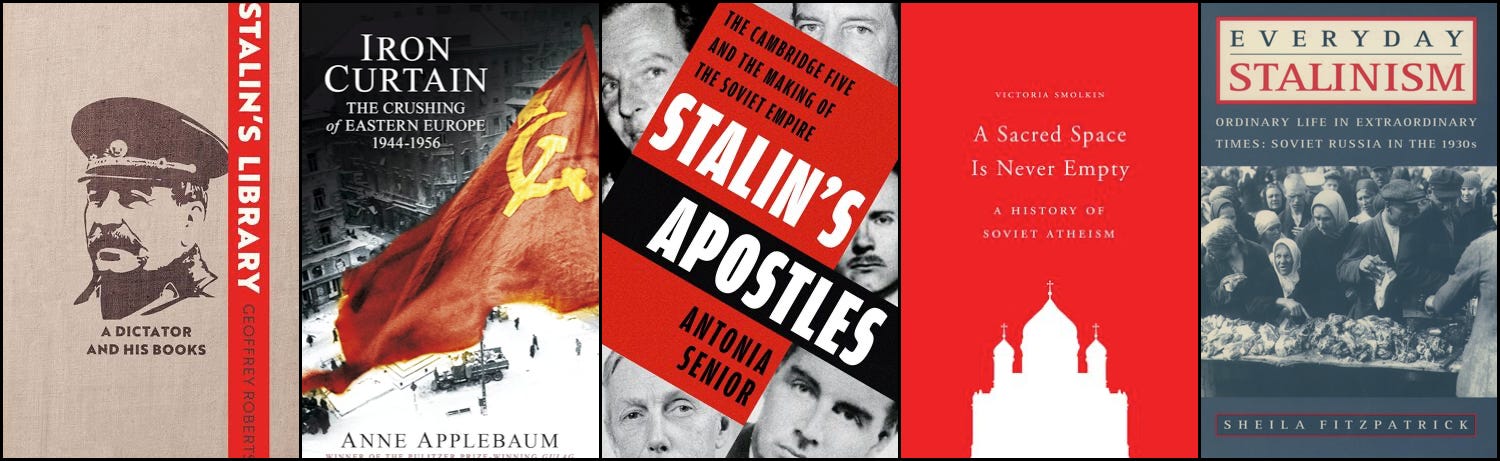
Stalin’s Library: A Dictator and his Books by Geoffrey Roberts: You think Stalin was a bestial barbarian? Well he was clearly a monster. But he was a true intellectual, as this book shows. Roberts found his book collection in books under the Kremlin and discovered 20,000 books annotated and reread. Astonishing. And all the more perplexing for that.
-
Iron Curtain by Anne Applebaum: her second entry in this list. How did Europe fall so completely into Stalin’s hands? This is another compelling book, full of tragedy and force. It’s hard to imagine how monolithic the Communist East felt for those growing up on either side of the Berlin Wall. But the events after the end of the 2WW solidified Stalin’s grip, right up until his death.
-
Stalin’s Apostles by Antonia Senior: this has only just come out in the last few weeks and is being hailed rightly as ground-breaking. It removes any shadow of glamour about the Cambridge Five, proving irrefutably that these traitors caused untold damage to the hopes of millions of Central Europeans as well as the founding of NATO. A gruesome bunch of operators who clearly knew what would result from their information.
-
A Sacred Space is Never Empty by Victoria Smolkin: who knew that a history of Soviet Atheism could be so gripping?! But this is. I had no idea how fluid the communists’ approach to religion was over the 80 years of the USSR. But they threw everything at religion and despaired at its resilience. But countless millions suffered in the process. Fascinating though.
-
Everyday Stalinism: Ordinary Life in Extraordinary Times by Sheila Fitzpatrick: this is by a major figure in USSR history, the brilliant Australian/British Sheila Fitzpatrick. This sounds grim and of course there were terrible things. But it is eye-opening, especially for those who just can’t imagine what it was really like.