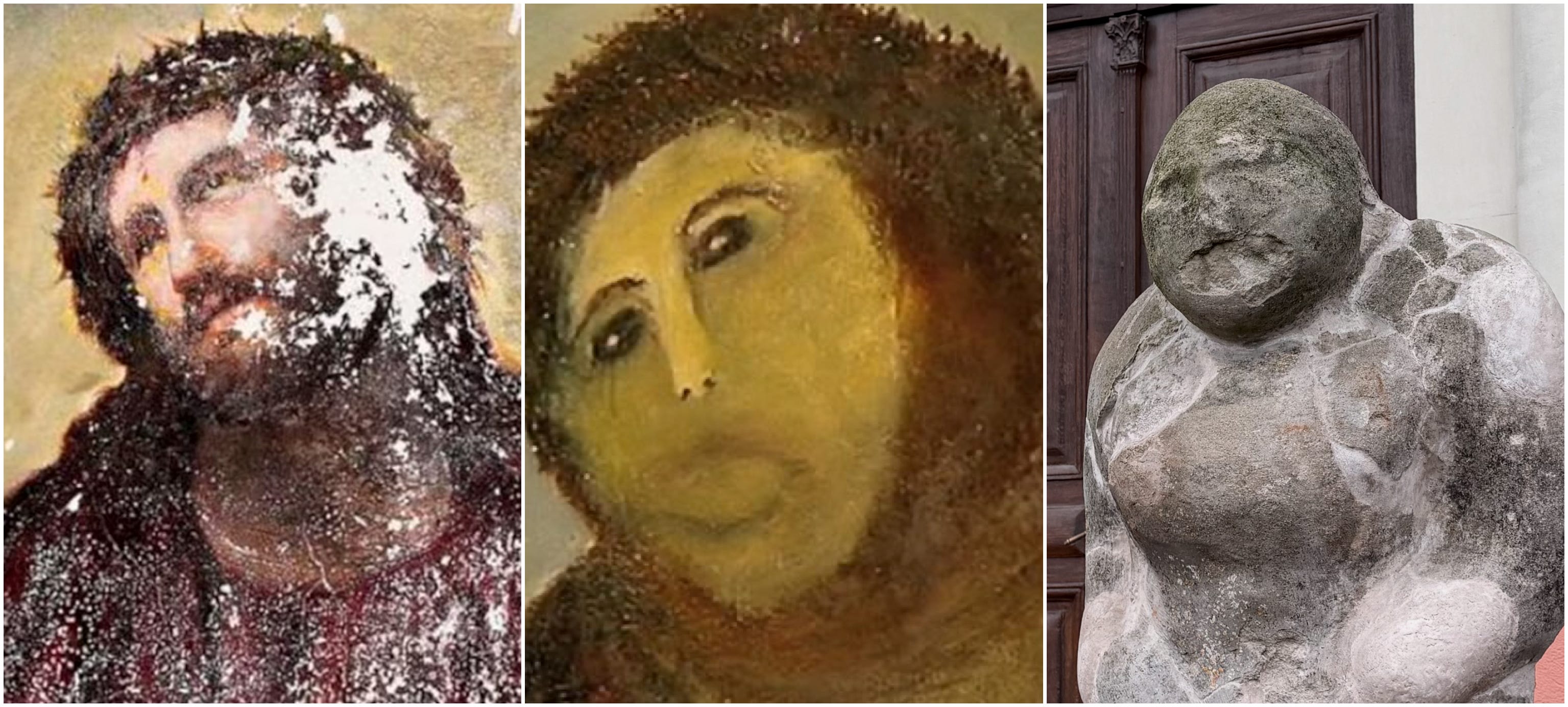
One of the things that art historians obsess over is the quest to find inspirations for great artists and art. Of course, great artists do extraordinary things with what inspires them—they are no mere copyists but seek to learn from their artistic predecessors and then adapt and create something new. So they go to enormous lengths to identify the books, exhibitions, and conversation partners that preoccupy them while making something.
Well, now than I’m back from my recent Ukraine trip, I delighted now to share the fruit of all my researches and observations. I was walking through the glories that are the streets of Lviv, in Ukraine’s western region. (It is one of my favourite cities on earth now). I had a few hours free and so wanted to visit the Andrey Sheptytsky National Museum just down from Lviv’s Opera House on the grandeur that is Svobody Prospekt. Sadly, I was to be disappointed. Or perhaps I just couldn’t find the door. Hey ho. But I did strike gold. Before I can explain why, I must backtrack somewhat.
Do you remember that notorious art restoration from Spain?
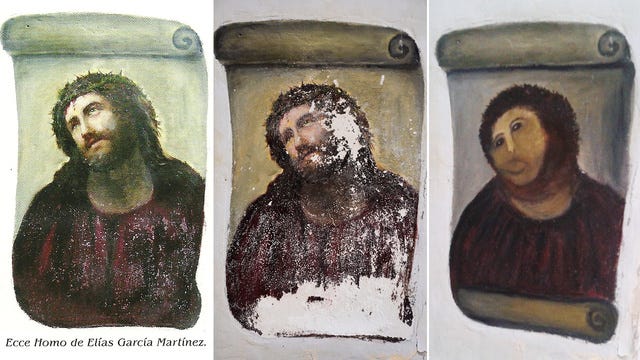
A small parish church, in the NE town of Borja, was home to a fairly standard fresco of Jesus crowned with thorns: the Ecce Homo. It was competently painted by Elías García Martínez in 1930, but images of its kind are two-a-penny in Spanish Catholic Churches. It certainly wasn’t the kind of thing to draw crowds. It wasn’t even (as Samuel Johnson famously said of Northern Ireland’s Giant’s Causeway) worth seeing but not worth going to see.
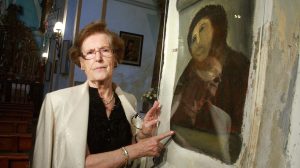
Enter, stage left, one 81-year-old Cecilia Giménez in 2012. She lived locally and was distressed by the fresco’s deterioration. She volunteered her services to the local priest and these apparently were gratefully received. There was a small catch. She had no training or experience with such things. And the result became known the world over.
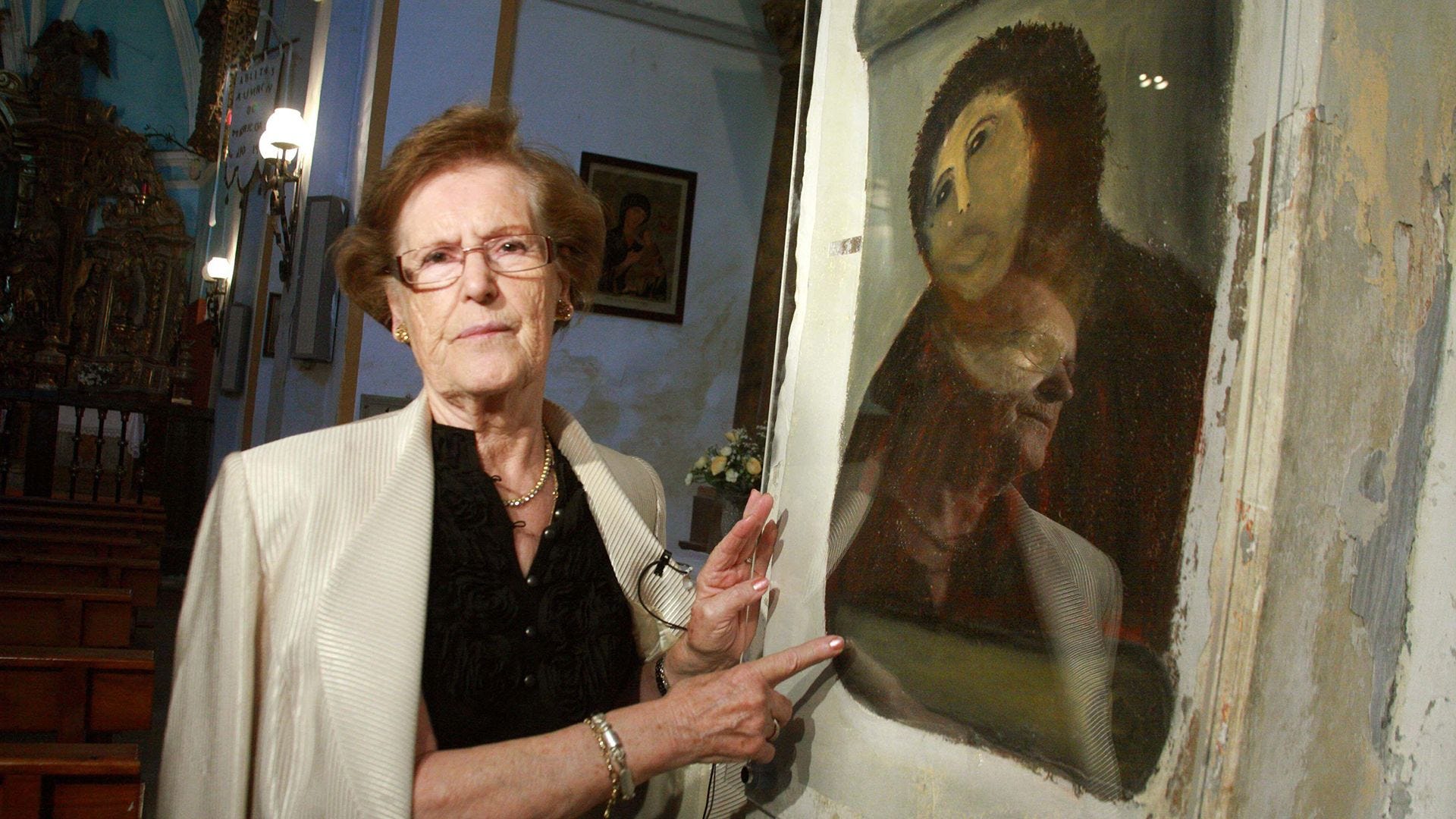
What made this so perfect is that this fresco then became a tourist attraction in its own right. People flocked to see this masterpiece. Brilliant.
But I think people have been too harsh on dear Cecilia. The prevailing view is that she was unschooled and unskilled and that her restoration was a disaster.
Which is where my Lviv encounter comes in. Because I actually believe I have found her inspiration. Which proves far greater degrees of intentionality, insight and historical awareness than previously credited. I’ve no idea what this thing was that I encountered. There wasn’t any information. But I’m fairly convinced in my own mind. So I will just leave this… object… here for you to judge for yourselves.
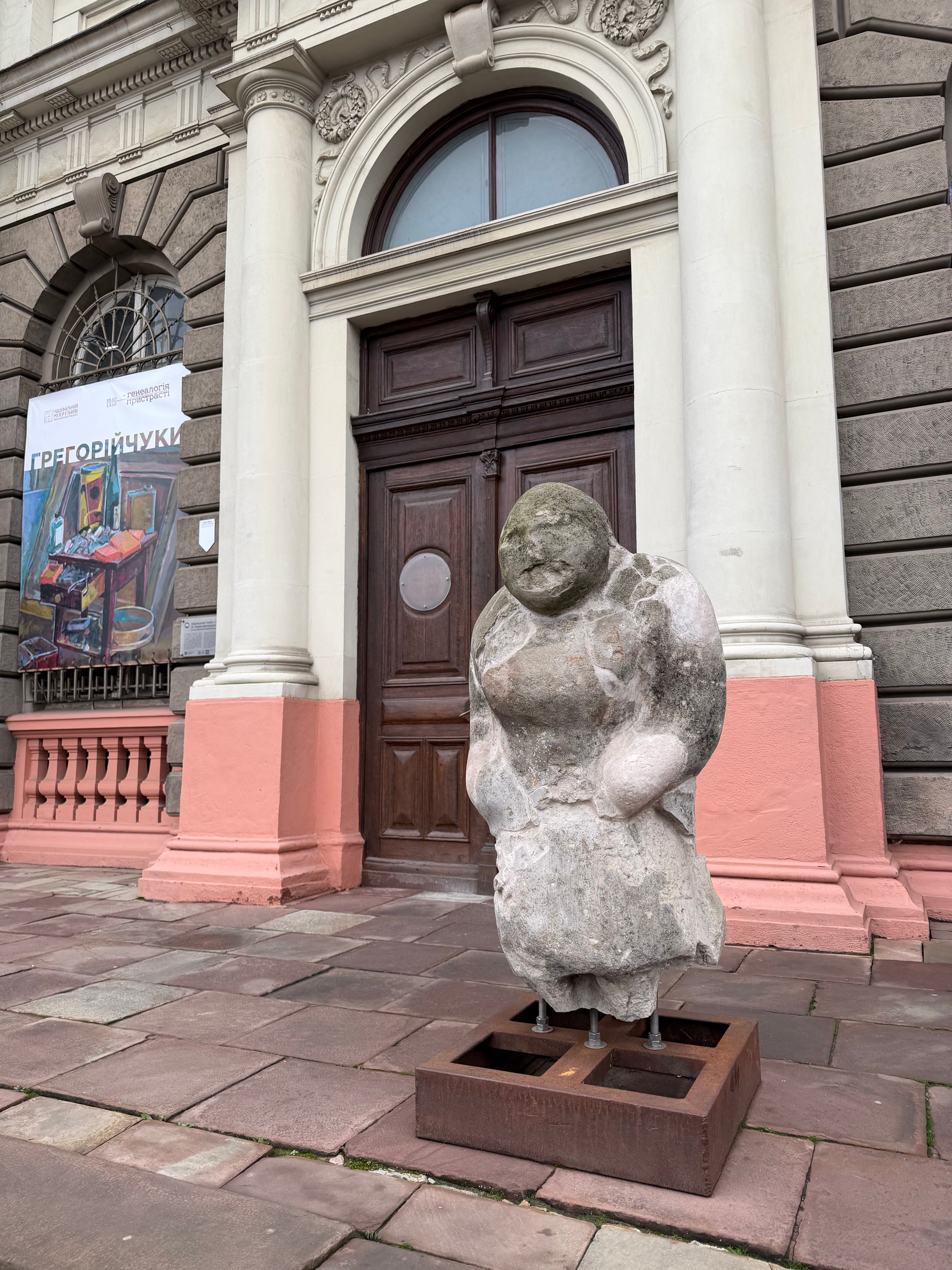
QED