
5 Memoirs: Facing Difficult Pasts
-
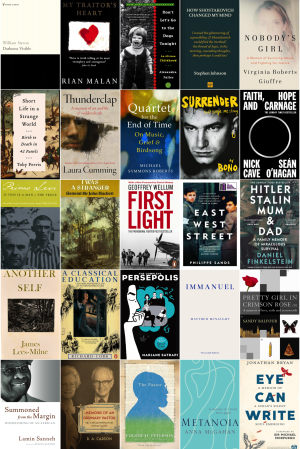
William Styron’s Darkness Visible: This was the first book that really helped me grapple with depression (having read far too many that merely annoyed or crushed (or both) me. Styron became suicidal at the peak of his literary career. How he got through that is astonishing, hearbreaking but inspiring.
-
Rian Malan’s My Traitor’s Heart: I read this soon after going to live in Uganda. A scion of the Malan dynasty that did so much to create South Africa’s apartheid system, Rian fled to the US. He would have to come to terms with his own racial prejudice despite his liberal values and abhorrence at apartheid. A brave book.
-
Alexandra Fuller’s Don’t Let’s Go To The Dogs Tonight: Fuller grew up on a farm in Rhodesia/Zimbabwe at a time of civil war. Ian Smith’s white minority rule had declared UDI (Unilateral Declaration of Independence) from the UK and was clinging. At times poignant, at times hilarious, a very moving childhood memoir.
-
Stephen Johnson’s How Shostakovich Changed My Mind: I’m a Shostakovich fanboy. This book is like no other and is truly remarkable. A BBC Radio 3 musicologist who always has interesting things to say found that the composer’s work uniquely helped him in deep mental illness. He sets out to find out why.
-
Virginia Roberts Giuffre’s Nobody’s Girl: I was in two minds about this, but she was undoubtedly one of the most courageous women of recent times. A terrible sequence of events leads to her becoming one of Jeffrey Epstein’s possessions. She is unflinching and honest, never claiming virtues that were not hers. Heartbreaking that in the end she couldn’t live with the pain of it all any longer.
5 Memoirs: Creative Lives
-
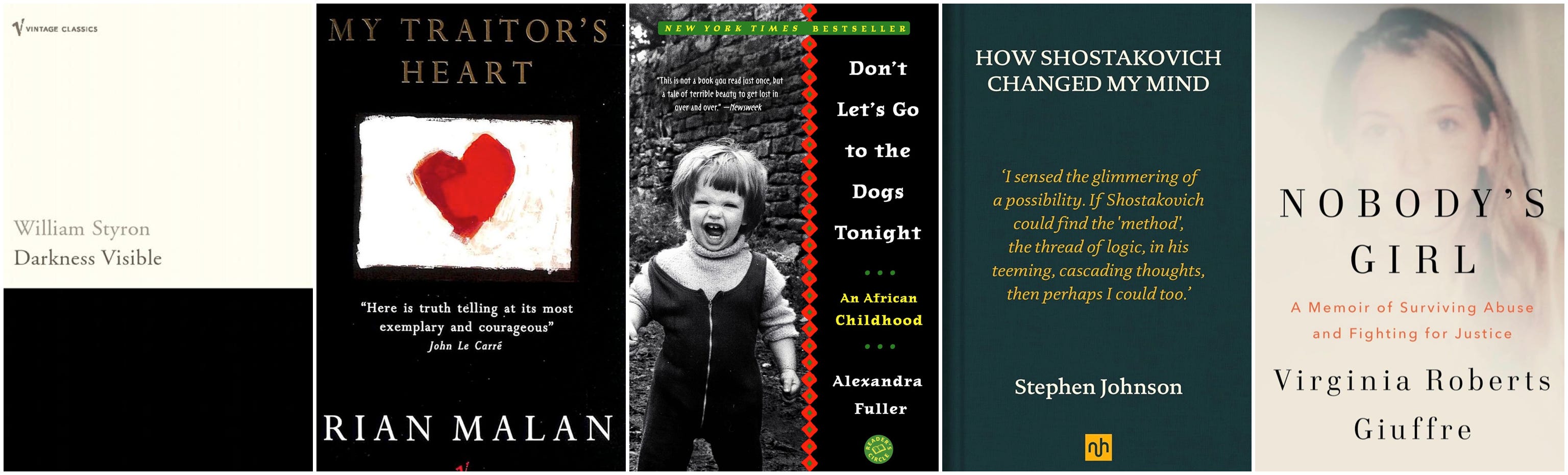
Toby Ferris’s Short Life in a Strange World: A strange quest, this one: to see every extant painting (there are 42) by Dutch artist Pieter Bruegel the Elder in situ, soon after his father dies. It evolves into a unique amalgam of life musing, art criticism, travelogue and family history. Inspiring and gorgeous to look at.
-
Laura Cumming’s Thunderclap: This has similarities with the Ferris. Laura Cumming is a popular art critic and she reflects on her artist father’s own death by exploring that of the artist Carel Fabritius (of The Goldfinch fame), killed at 32 in Delft’s terrible explosion in 1654. Again a deeply insightful and beautiful book.
-
Michael Symmons Roberts’s Quartet for the End of Time: This time a contemporary poet discusses meaning, grief and belief with contemporary composer Sir James Macmillan, through the lens of Olivier Messiaen’s haunting wartime composition Quartet for the End of Time. A rich and profound book, it hits hard. I suspect I will have to reread it at some point to glean all its treasure.
-
Bono’s Surrender: 40 songs, our story: OK, I’m a U2-fanboy too and have been for decades. So I was obviously going to love this. But I was also a little nervous about it, because dear old Bono can come over as a bit preachy and full of it all. But this is full of self-deprecation; and what is particularly special about it is that it is not about him so much as it is about all the others who made him what he is. It is an act of generosity in itself.
-
Nick Cave & Seán O’Hagan’s Faith, Hope and Carnage: This was the biggest surprise of recent years. It got right under my skin, as rock star and rock journalist discuss all kinds of things but, above all, the raw beauties and profound griefs of our humanity. It’s inspiring and unputdownable.
5 Memoirs: Second World War legacies
-
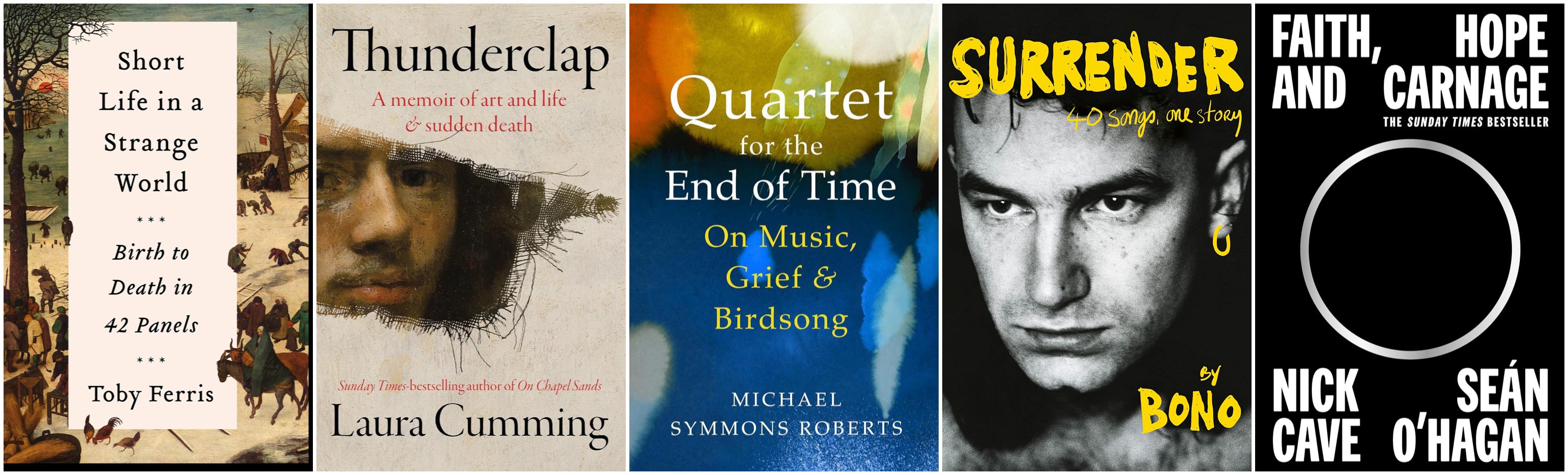
Primo Levi’s If This Is A Man: I read this at university and have never forgotten it. Levi survived Auschwitz (quite how he explains in this and other books). It is searing writing and simply one of the most important books written in the 20th Century. It is a remarkable act of witness and should be studied by every generation. It is, weirdly enough, a suitable companion to the Styron above (they became good friends).
-
John Hackett’s I was a Stranger: A British paratrooper’s account of being protected and hidden after escaping from being wounded and captured by Nazi forces at Arnhem. A wonderful account of immense courage and friendship with the Dutch de Nooij family. They hid their secret guest right under German noses but shared their lives and faith with Hackett. So hopeful.
-
Geoffrey Wellum’s First Light: This memoir was written years after the war, and only made it into the public domain through the eagle eyes of historian James Holland. Wellum was barely old enough for recruitment into the RAF in 1939 and would fly Spitfires in the Battle of Britain. Vivid, gripping and very affecting.
-
Philippe Sands’s East-West Street: I included this in the Ukraine 25 list, it is a powerful account of some of Lviv’s Jewish survivors, including members of his own family as well as the legal minds who would influence the Nuremberg Trials and the consensus about international law. He travels to Lviv to learn more of them, but it is agonising to remember that Lviv (Lwów as it was) was one of Europe’s greatest Jewish cities pre-Holocaust.
-
Daniel Finkelstein’s Hitler, Stalin, Mum & Dad: Even more personal, this story about both sides of Finkelstein’s family is astonishing and barely credible. Testimony to resilience, luck, determination and integrity. What a family. I couldn’t put this one down either.
5 Memoirs: Unusual People (ie isn’t an obvious category!)
-
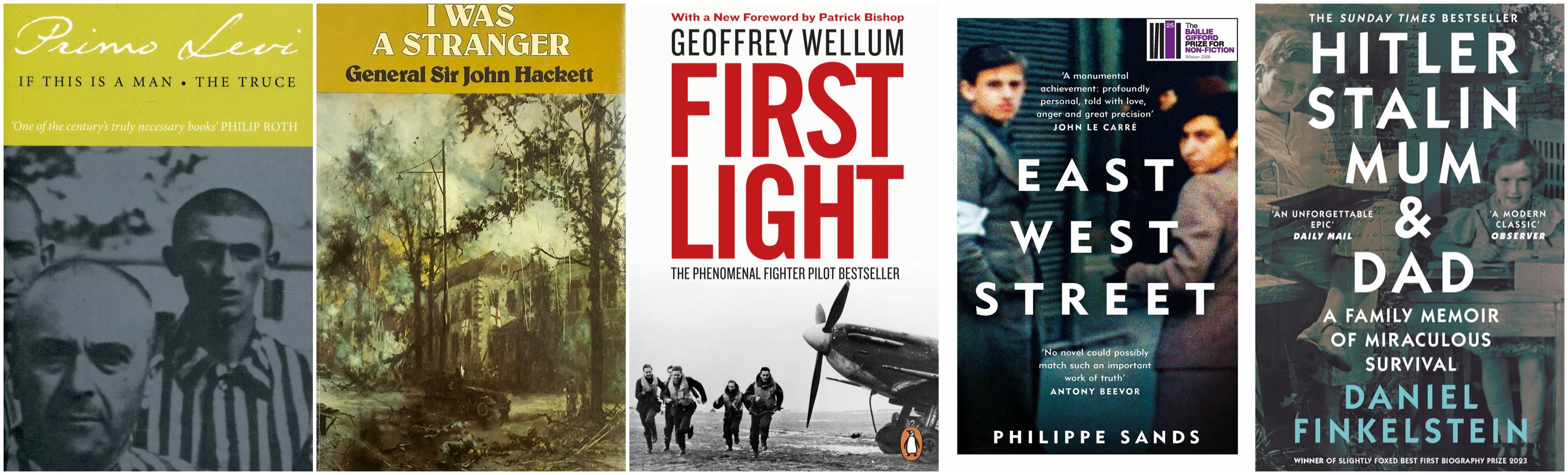
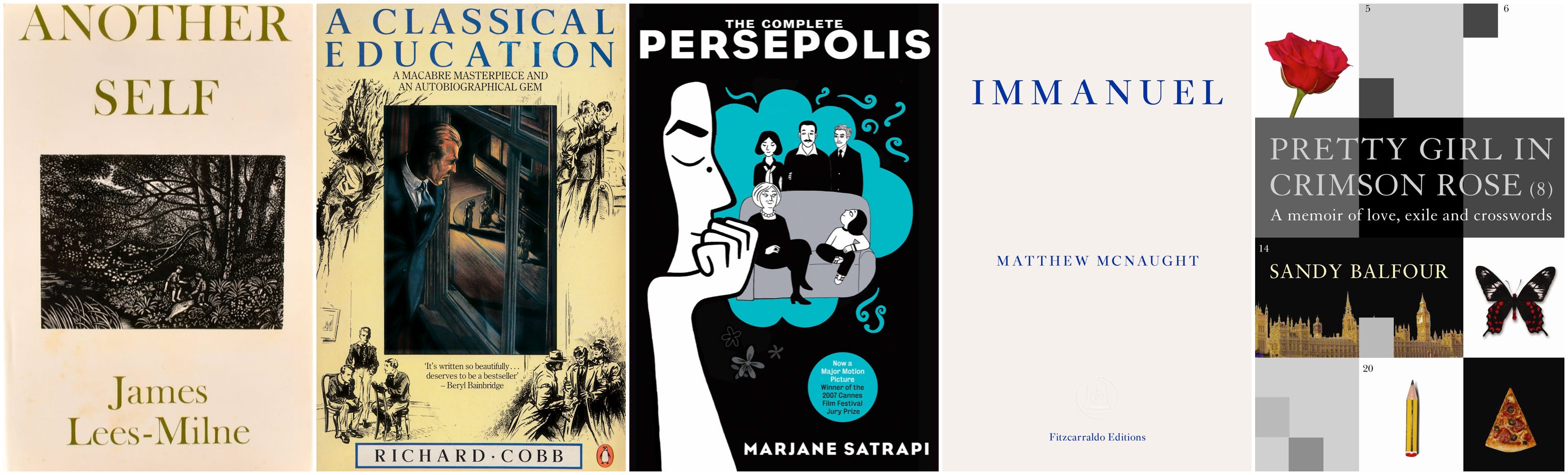
James Lees-Milne’s Another Self: One of the key players in the creation of the UK’s National Trust, Lees-Milne’s upbringing in the lower echelons of the aristocracy is nothing if not unusual. He always felt a bit of an oddball outsider as a result, but it meant that he had a sharp eye for the absurd and hilarious. And I found myself regularly laughing out loud.
-
Richard Cobb’s A Classical Education: Richard Cobb was a lifelong Francophile and scholar but this memoir is utterly unexpected. He goes to visit an old school friend from Shrewsbury after he’s been released from a Dublin asylum after murdering his mother. Cobb then tries to uncover exactly what had led to the tragedy, including the time of their friendship in which he had experienced something of the mother’s tyrannical behaviour. Weird but gripping.
-
Marjane Satrapi’s The Complete Persepolis: Marjane has only very recently died in France which seems far too soon. This graphic-novelised account of her childhood in pre-revolutionary Iran, the experiences of her dissident family during the Islamic revolution and her subsequent escape are all the more poignant for being stylised as cartoons. It led to a remarkable animation too.
-
Matthew McNaught’s Immanuel: I only discovered this because of the BBC World Service investigation into the cult that grew around Nigerian megachurch pastor TB Joshua. It is McNaught’s honest account of losing faith and trying to understand what happened to him and several friends who fell under its spell. A salutary warning but also a beautifully written book.
-
Sandy Balfour’s Pretty Girl in Crimson Rose: I just love British cryptic crosswords (they’re not like American crosswords and they are an acquired taste; I just wish I was better at them!). And so does Sandy Balfour. He came to Britain from South Africa and tells his story through the discovery of cryptics and love! [The title is a clue: REBELLED = Pretty Girl (ie BELLE) placed inside Crimson (ie RED) results in Rose (RE-BELLE-D); marvellous]
5 Memoirs: Faith in Action
-
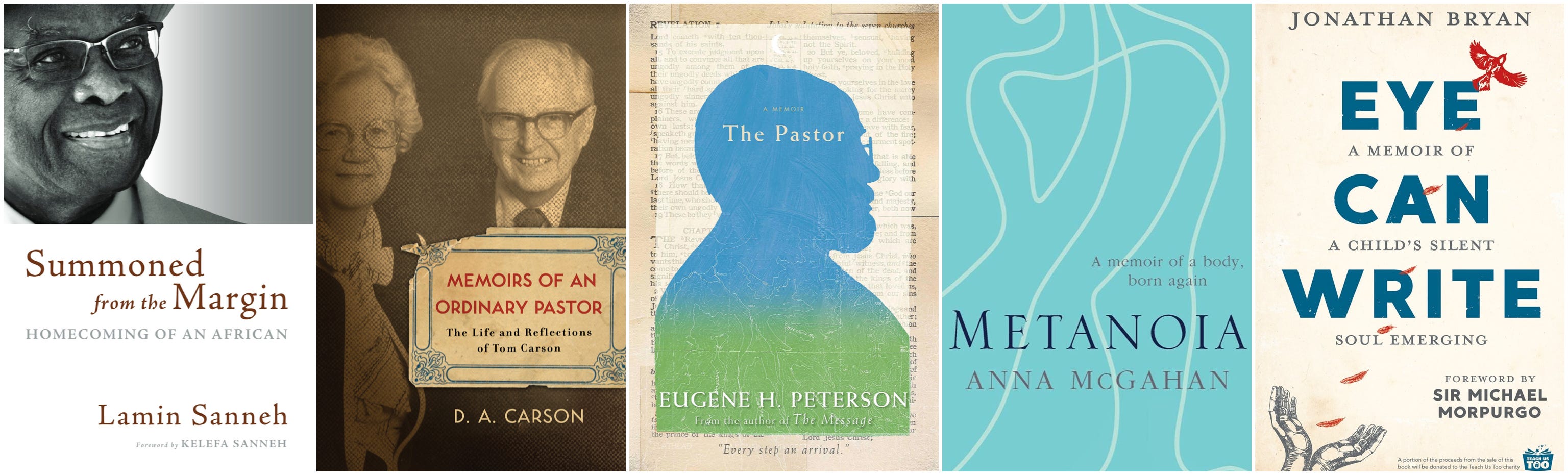
Lamin Sanneh’s Summoned from the Margin: Sanneh was a remarkable scholar from The Gambia, who became Yale’s Professor of World Christianity. His start in life couldn’t have made that less likely – born into Muslim royalty, he encountered Christians who took him seriously as an older teenager. There were some things that left me scratching my head a bit about this story, but there’s no doubting his profound impact in global missiology.
-
D. A. Carson’s Memoirs of an Ordinary Pastor: Don Carson was due to speak at the Oxford Christian Union the day after news of his father’s death in Canada came through. He kept the commitment before flying back; I’ll never forget the talk as he ditched the notes and simply talked about his dad. Tom Carson was a senior pastor for a short while and thereafter never held senior positions. But his life impacted 100s of people in a deep but unassuming way. Inspiring.
-
Eugene Peterson’s The Pastor: There is something slightly uncomfortable about a minister writing an autobiography. Peterson gets round this by giving an account of all the teachers and most important lessons learned in a lifetime of ministry. So far from being a catalogue of achievements (as such things could too easily degenerate into) he deflects and points to many others. Found this sooo helpful.
-
Anna McGahan’s Metanoia: A memoir of a body, born again: Anna McGahan is an Australian actress who had really begun to hit the big time. She became a poster child for sexual liberation and modern fulfilment — all while her body was taking a pummelling and her heart was desperately searching for the good life just around the corner. And then she encountered God… an incredibly moving testimony.
-
Jonathan Bryan’s Eye Can Write: born with severe cerebral palsy, Bryan was imprisoned in a broken and uncontrollable body and unable to communicate. Until his mother noticed that he could move his eye. He was remarkably liberated and showed the world that he had an irrepressible humour and active mind. Not only that, he was someone who trusted in Christ implicitly despite the terrible limitations. A super book. Sadly he died last year at only 19. But what a legacy.